Cushion Traction Tires: The Middle Ground Between Cushion and Solid Pneumatic
By Pollies Forklifts Ltd. – Edmonton, Alberta
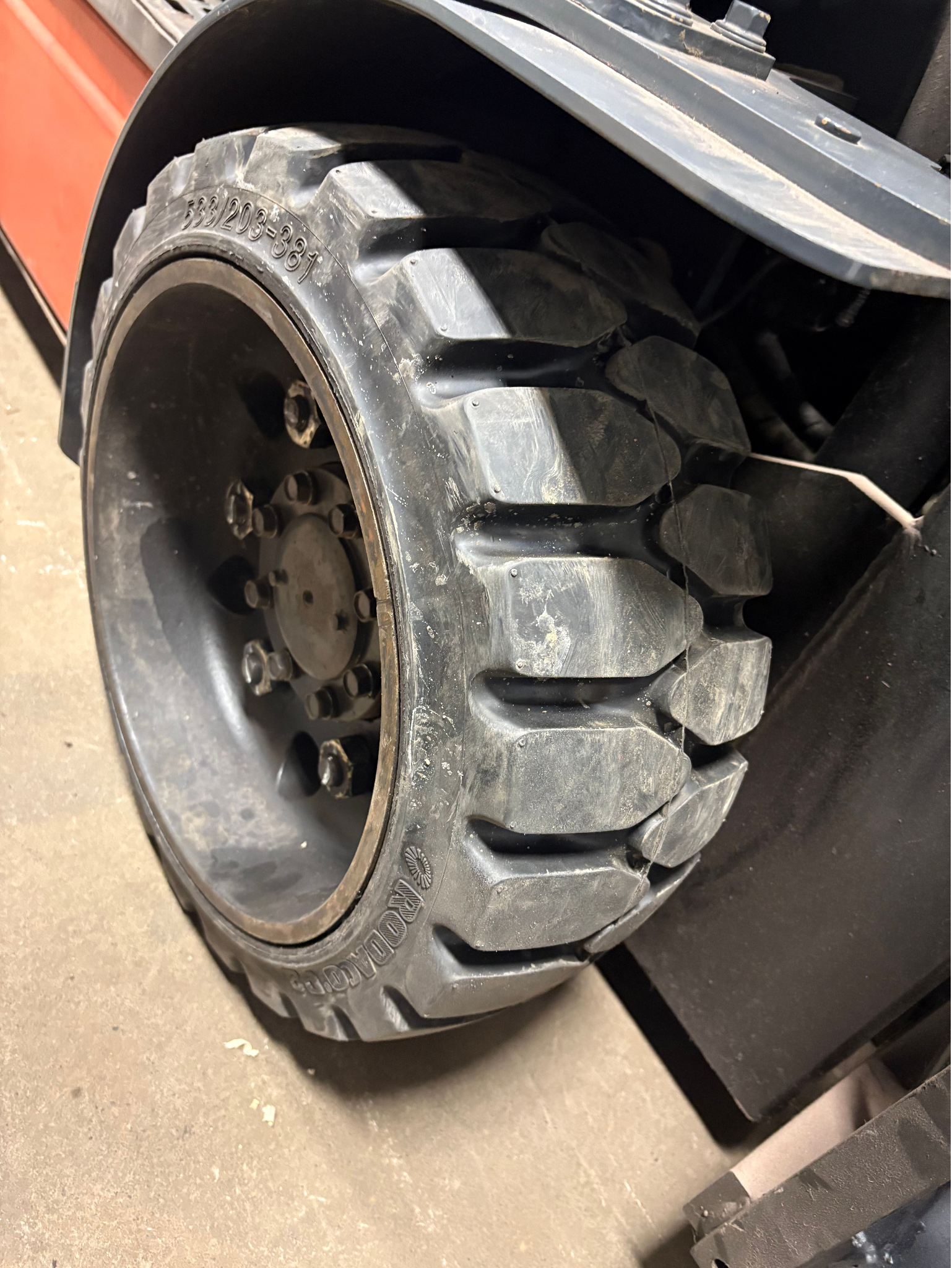
When choosing forklift tires, many operators assume there are only two options: smooth cushion tires for indoor use or solid pneumatic tires for outdoor work.
In reality, cushion traction tires offer a smart middle-ground solution — combining the compact structure of cushion tires with improved outdoor grip.
For many operations in Edmonton and across Alberta, this balance makes a big difference.
Understanding the Three Tire Types
1️⃣ Smooth Cushion Tires
- Solid rubber pressed onto a steel band
- Designed primarily for indoor, smooth concrete floors
- Low overall machine height
- Tight turning radius
- Limited traction on dusty or damp surfaces
Best suited for strictly indoor warehouse environments.
2️⃣ Cushion Traction Tires
- Same pressed-on cushion tire structure
- Added tread pattern for increased grip
- Maintains low center of gravity
- Offers improved traction compared to smooth cushion tires
This is the ideal solution for indoor use with light outdoor exposure.
3️⃣ Solid Pneumatic Tires
- Larger, thicker rubber construction
- Designed for rough outdoor terrain
- Higher ground clearance
- Strongest traction of the three
Best suited for construction sites, gravel yards, and uneven surfaces.
The True Position of Cushion Traction Tires
Cushion traction tires are:
- ✅ More capable outdoors than smooth cushion tires
- ❌ Still slightly less aggressive than solid pneumatic tires
They provide better traction on:
- Outdoor concrete
- Loading docks
- Slightly damp surfaces
- Light debris conditions
However, they are not intended for gravel, snow, or heavy uneven terrain.
Why Many Businesses Choose Cushion Traction
In many warehouse operations, forklifts:
- Work primarily indoors
- Occasionally travel outside for loading/unloading
- Operate on concrete yards
- Move between dock and warehouse areas
Using smooth cushion tires may result in reduced grip during wet conditions.
Switching to solid pneumatic tires increases machine height, turning radius, and cost.
Cushion traction tires provide a practical balance:
- Improved traction
- Maintained maneuverability
- Controlled operating cost
Performance Comparison
| Feature | Smooth Cushion | Cushion Traction | Solid Pneumatic |
| Indoor maneuverability | Excellent | Excellent | Moderate |
| Outdoor traction | Low | Moderate–High | High |
| Rough surface capability | Low | Moderate | High |
| Machine stability | High | High | Moderate |
| Cost | Lower | Mid-range | Higher |
Is Cushion Traction Right for You?
Consider these questions:
- Is your forklift used mostly indoors?
- Does it occasionally operate on outdoor concrete?
- Do you want improved traction without switching to pneumatic tires?
If yes, cushion traction tires may be the most efficient and cost-effective solution.
Final Thoughts
Cushion traction tires are often overlooked, but they serve a very practical purpose. They bridge the gap between traditional indoor cushion tires and heavy-duty outdoor solid pneumatic tires.
At Pollies Forklifts Ltd., we help customers choose the right configuration based on real working conditions — not just specifications on paper.
If you’re evaluating forklift tire options or planning your next equipment purchase, we’re here to help you make the right decision.